
Chennai offices are being rebuilt around the devices people carry
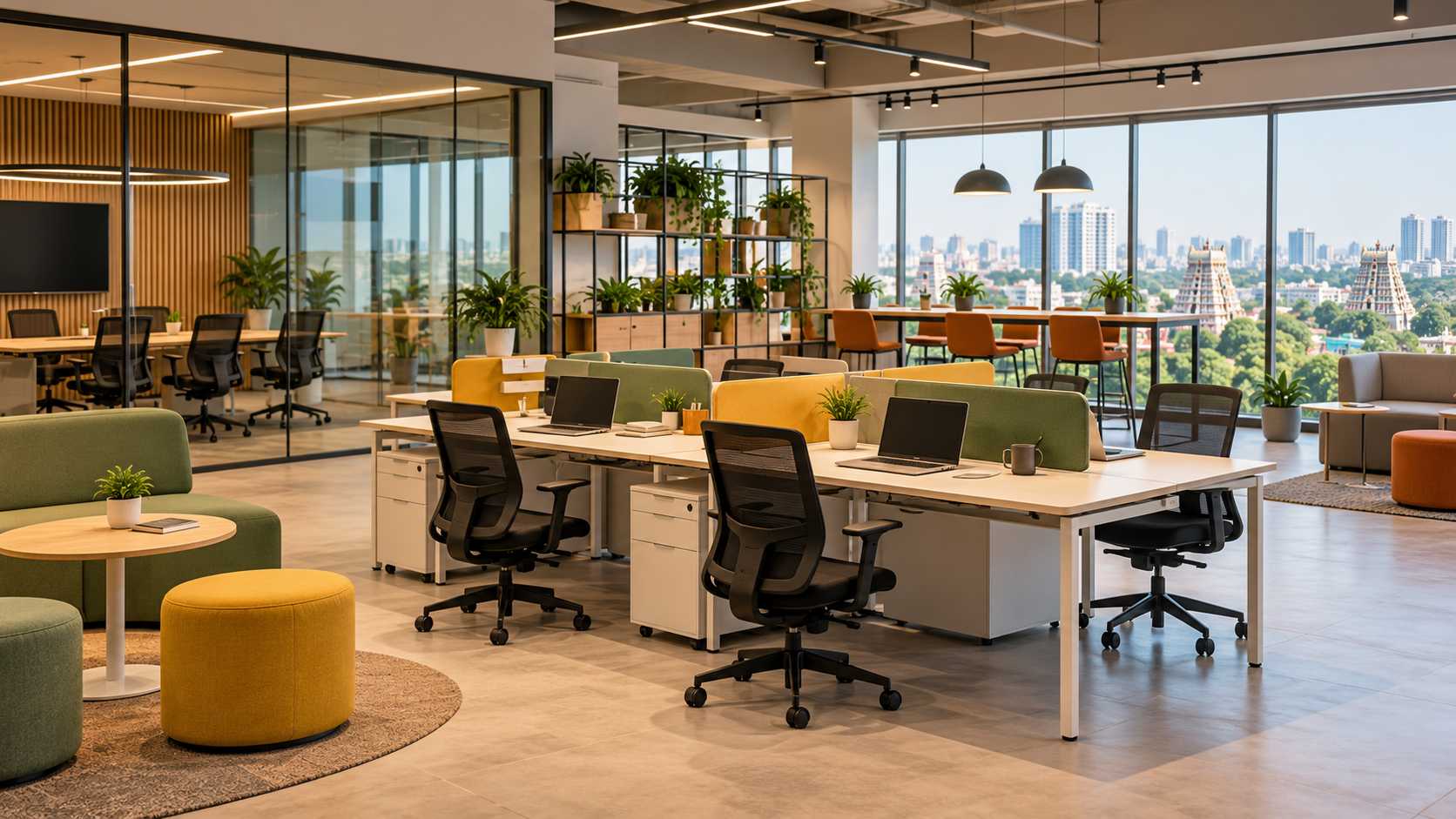
Chennai’s office market has shifted from the commercial blocks of T. Nagar and Nungambakkam to the IT corridor along OMR, Guindy and Perungudi, and the furniture inside has had to keep pace. The furniture inside these workspaces, including Modular Office Furniture Chennai, has evolved to meet changing workplace needs. A workstation today carries a laptop, two monitors, a phone, a headset and a video call before lunch. A fixed wooden desk with one plug point cannot support that load. Modular office furniture, built as interchangeable units with technology designed into the frame, is how Chennai companies are closing the gap between the space they lease and the way their teams actually work.
Power and connectivity built into the desk
The most visible change is where the power lives. Modular workstations now ship with flip-up power modules set into the desktop, each carrying 230V sockets, USB-A and USB-C ports, so a laptop charges without a trailing adapter. Cable trays run under the worktop and down the leg, keeping floor boxes and extension boards out of sight and out of the housekeeping team’s way. Wireless charging pads sit flush on the surface. For Chennai offices running hybrid rosters, these features also make small office interior design in Chennai more practical, meaning any desk is ready for any employee the moment they sit down. .
Height-adjustable and app-controlled workstations
Sit-stand desks have moved from a wellness perk to a standard line item in Chennai fit-outs. Motorised frames move from seated to standing height at the press of a button, and newer controllers store personal presets or pair with a phone app, so a shared desk returns to a user’s saved height on arrival. Some systems log sitting time and prompt the user to stand. Because the frame is modular, the same motor base accepts different worktop sizes, letting a team change desk footprint without replacing the mechanism.
Meeting pods and collaboration furniture wired for video
Open-plan floors in Chennai’s IT parks are loud, and most meetings now include someone dialling in. Acoustic pods answer both problems. A modular pod arrives as flat-pack panels and assembles inside the leased space without civil work, carrying its own LED lighting, ventilation fan, power outlets and a mount for a video bar. Larger collaboration tables integrate a screen, a wireless presentation receiver and tabletop microphones, so a hybrid meeting starts without anyone hunting for an HDMI cable. These features are becoming an important part of corporate interiors, helping businesses create flexible workspaces that support modern office needs. When the lease ends, the pod comes apart and moves to the next floor.
Sensors, desk booking and space data
Tech integration also runs the other way: the furniture reports back. Occupancy sensors fixed under desks and inside pods feed a desk-booking app, showing employees which seats are free and showing facility managers which zones sit empty on Mondays. Over a quarter, that data tells a company whether it needs 200 workstations or 140, and whether it needs more four-seat pods than twelve-seat boardrooms. For a Chennai firm paying OMR rents per square foot, this becomes a direct input into the next lease negotiation and helps guide small office interior design in Chennai decisions.
Why modular suits Chennai’s leased, fast-scaling offices
Most Chennai companies occupy leased floors on three-to-five-year terms, and headcount in global capability centres and IT services swings with project cycles. Fixed joinery locks a company into one layout for the whole term. Modular systems on a common frame let a facilities team add a bay of eight workstations in a week, swap a cabin for a pod, or move everything to a new building. Powder-coated steel frames and laminate tops also hold up better in Chennai’s humidity than site-built wooden partitions, making them a practical choice for corporate interiors.
What to ask your furniture partner before you buy
- Are the power modules rated for Indian 230V supply, with ISI-marked components?
- Does the sit-stand controller support user presets or a phone app?
- Can cable trays be reached without dismantling the worktop?
- Do pods carry their own ventilation and lighting, and how long does assembly take?
- Are occupancy sensors included, and does the booking software connect to Google Workspace or Microsoft 365?
- What is the lead time to add a bay of workstations on the same system a year from now?
Designed in, not bolted on
Tech integration is no longer an upgrade added to office furniture in Chennai after the fact; it is the reason modular systems are being specified in the first place. Companies investing in Modular Office Furniture Chennai with frames that have power, adjustability, acoustics and sensors built in get a workplace that adapts to the next hiring cycle and the next lease, instead of one that has to be torn out and rebuilt every few years.
