
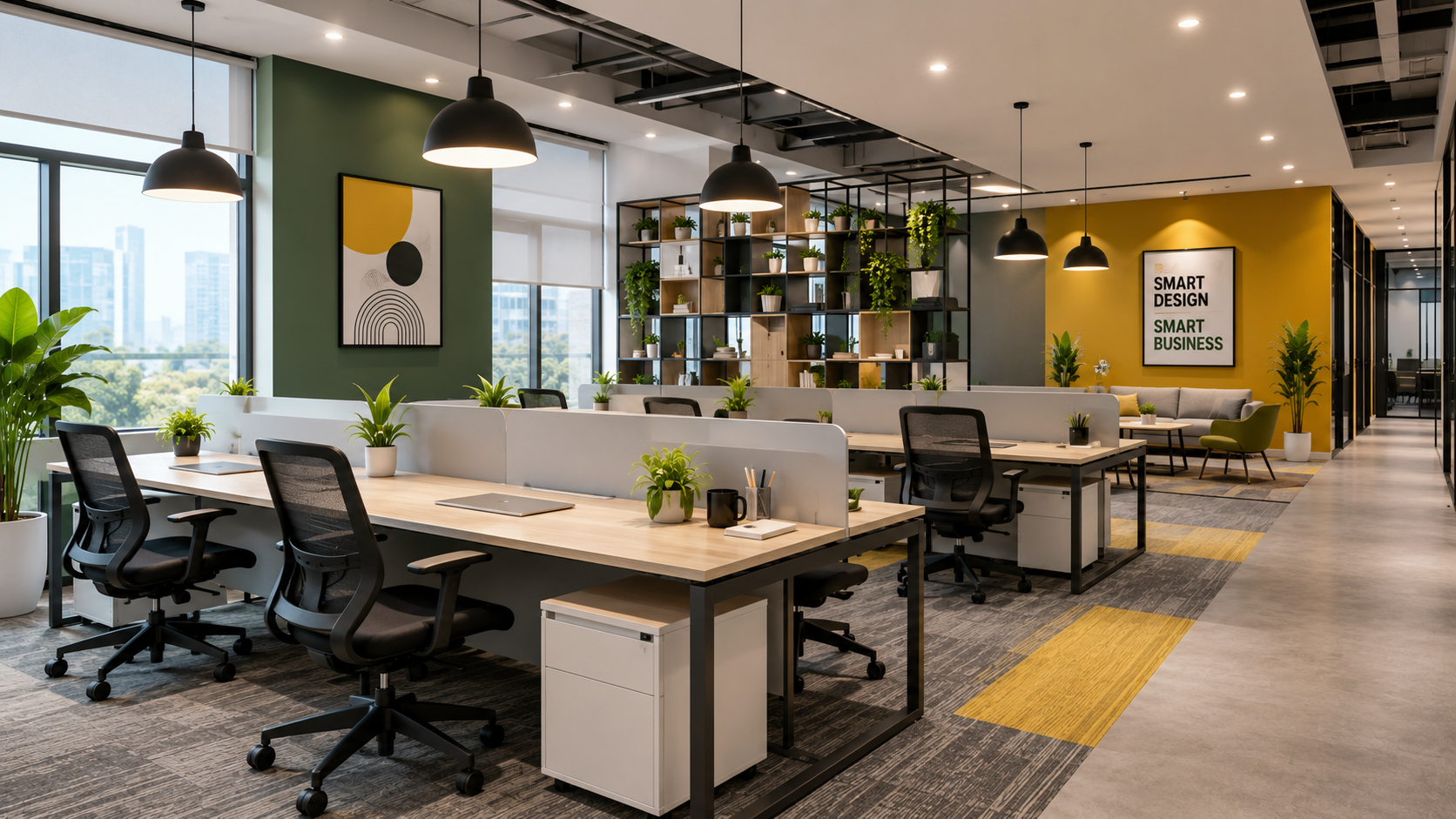
Introduction
A well-designed office is no longer reserved for large corporations with unlimited budgets. Across Chennai, startups, IT firms, consulting companies, healthcare businesses, and manufacturing offices are proving that functional and visually appealing workplaces can be created without excessive spending. The key lies in thoughtful planning, efficient space utilisation, and choosing experienced office interior decorators who understand both aesthetics and business priorities.
In 2026, office interiors are becoming more investment-focused rather than expense-driven. Companies want workspaces that improve productivity, support collaboration, reflect their brand identity, and remain adaptable as teams grow. Instead of chasing expensive luxury trends, businesses are looking for practical design solutions that deliver measurable value.
Why Budget-Friendly Doesn’t Mean Basic
One of the biggest misconceptions among business owners is that affordable office interiors must compromise on quality. In reality, the opposite is often true. Experienced design firms know where investments matter and where costs can be optimised. Premium materials are reserved for high-impact areas such as reception spaces, boardrooms, and client-facing zones, while durable, cost-effective finishes are used in workstations and utility spaces.
This balanced approach allows businesses to achieve a professional environment without exhausting their capital. The best interior designers today begin every project by understanding operational requirements rather than recommending expensive finishes. They evaluate employee count, workflow patterns, storage needs, technology infrastructure, and future expansion before creating a layout. This planning-first methodology reduces unnecessary spending and prevents costly modifications later.
Chennai Businesses Are Redefining Office Design
Chennai’s commercial landscape has changed significantly over the past few years. Flexible work models, hybrid teams, and rising commercial rentals have encouraged companies to maximise every square foot.
Instead of large private cabins, businesses now prefer:
- Multi-functional meeting spaces
- Collaborative workstations
- Quiet focus zones
- Modular furniture systems
- Flexible breakout areas
- Smart storage solutions
These layouts improve employee experience while reducing construction and furniture costs. Many businesses also choose phased execution, completing essential work first and adding premium upgrades as the organisation grows. This approach makes financial planning easier while ensuring the office remains operational during expansion.
What Makes the Best Interior Works for Office Projects?
Every successful office renovation shares one common factor: functionality comes before decoration.
The best interior works for office projects are those that solve everyday workplace challenges rather than simply looking attractive.
Some practical features include:
- Efficient Space Planning
Unused corners, oversized cabins, and poorly arranged furniture often waste valuable floor area. Intelligent layouts create additional workstations without increasing office size.
- Modular Furniture
Modular desks, movable partitions, and adaptable storage systems provide flexibility for changing team structures. Businesses avoid future renovation costs because the office can evolve with minimal disruption.
- Durable Materials
Affordable does not mean selecting the cheapest materials available. High-quality laminates, commercial flooring, powder-coated metal furniture, and moisture-resistant finishes offer long-term durability with lower maintenance expenses.
- Better Lighting
Natural daylight combined with energy-efficient LED lighting creates brighter workspaces while reducing electricity bills. Proper lighting also improves employee comfort throughout the day.
- Acoustic Planning
Meeting rooms, collaborative areas, and focus zones require different sound levels. Strategic acoustic panels, fabric partitions, and ceiling treatments improve productivity without extensive structural changes.
These design decisions collectively deliver greater value than expensive decorative elements.
Where Businesses Can Save Without Compromising Quality
One of the strongest indicators of experienced designers is knowing exactly where budgets can be optimised. Instead of custom-building every element, professionals recommend standardised modular furniture where appropriate.
Existing flooring may be retained if it remains structurally sound. False ceiling modifications can be limited to specific zones rather than throughout the office. Glass partitions often replace permanent masonry walls, reducing construction time while creating an open and brighter environment. Similarly, neutral colour palettes combined with strategic branding elements create a premium appearance without requiring expensive decorative installations. This practical mindset distinguishes experienced office interior decorators from contractors focused solely on execution.
Choosing the Right Design Partner in 2026
Selecting a design company should involve much more than comparing quotations. Businesses should evaluate whether the team understands workplace strategy, project management, technical coordination, and post-completion support.
The best interior designers usually demonstrate expertise through:
- Commercial office portfolio across industries
- Transparent budgeting process
- Detailed material specifications
- In-house execution capabilities
- Realistic project timelines
- Strong vendor network
- Quality assurance processes
- Maintenance support after handover
Hidden costs, project delays, poor workmanship, and repeated repairs often make inexpensive contractors far more expensive in the long run. Experienced firms focus on delivering lifecycle value rather than simply reducing initial project costs.
Practical Budget Planning for Office Interiors
Businesses planning office interiors in Chennai during 2026 should allocate budgets based on priorities instead of percentages alone.
Reception areas create first impressions and deserve thoughtful investment. Employee workstations should prioritise ergonomics and durability. Meeting rooms require proper acoustics and technology integration. Pantry spaces should remain functional and easy to maintain. Technology infrastructure, including structured cabling, power management, and future scalability should never be treated as an afterthought. A carefully prioritised budget delivers better long-term returns than evenly distributing spending across every area.
Why Long-Term Value Matters More Than Initial Cost
An office is a working environment that influences employee satisfaction, operational efficiency, client perception, and business growth every day. Choosing quality planning over unnecessary luxury helps organisations avoid frequent renovations, maintenance expenses, and workspace inefficiencies. The best interior works for office are those that balance aesthetics, functionality, sustainability, and financial responsibility.
Businesses that partner with experienced interior designers gain workspaces that not only look professional but also support productivity for years to come. Investing in smart planning, durable materials, and adaptable layouts enables businesses to create modern offices that remain future-ready without exceeding their budgets. The right design partner doesn’t simply transform an office; they help build a workspace that grows alongside the business.
